Work
This Is Not Code
- Year
- 2025–2026
- Medium
- Custom software (Python, py5canvas), inkjet print on Hahnemühle Photo Rag 308 gsm
- Dimensions
- 59.4 × 244.7 cm
Although I had spent years writing and reading code, I had almost never actually looked at it.
About the work
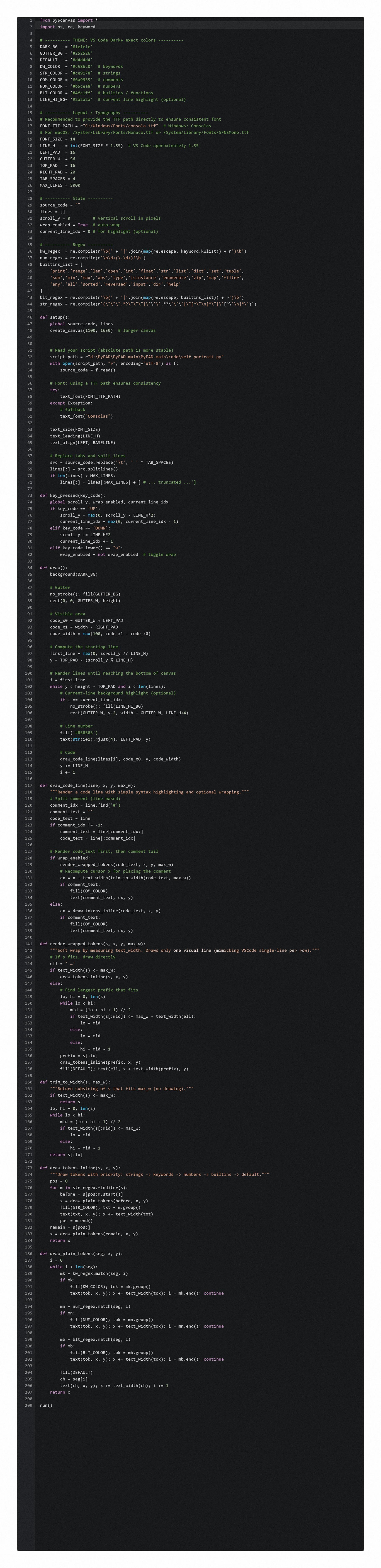
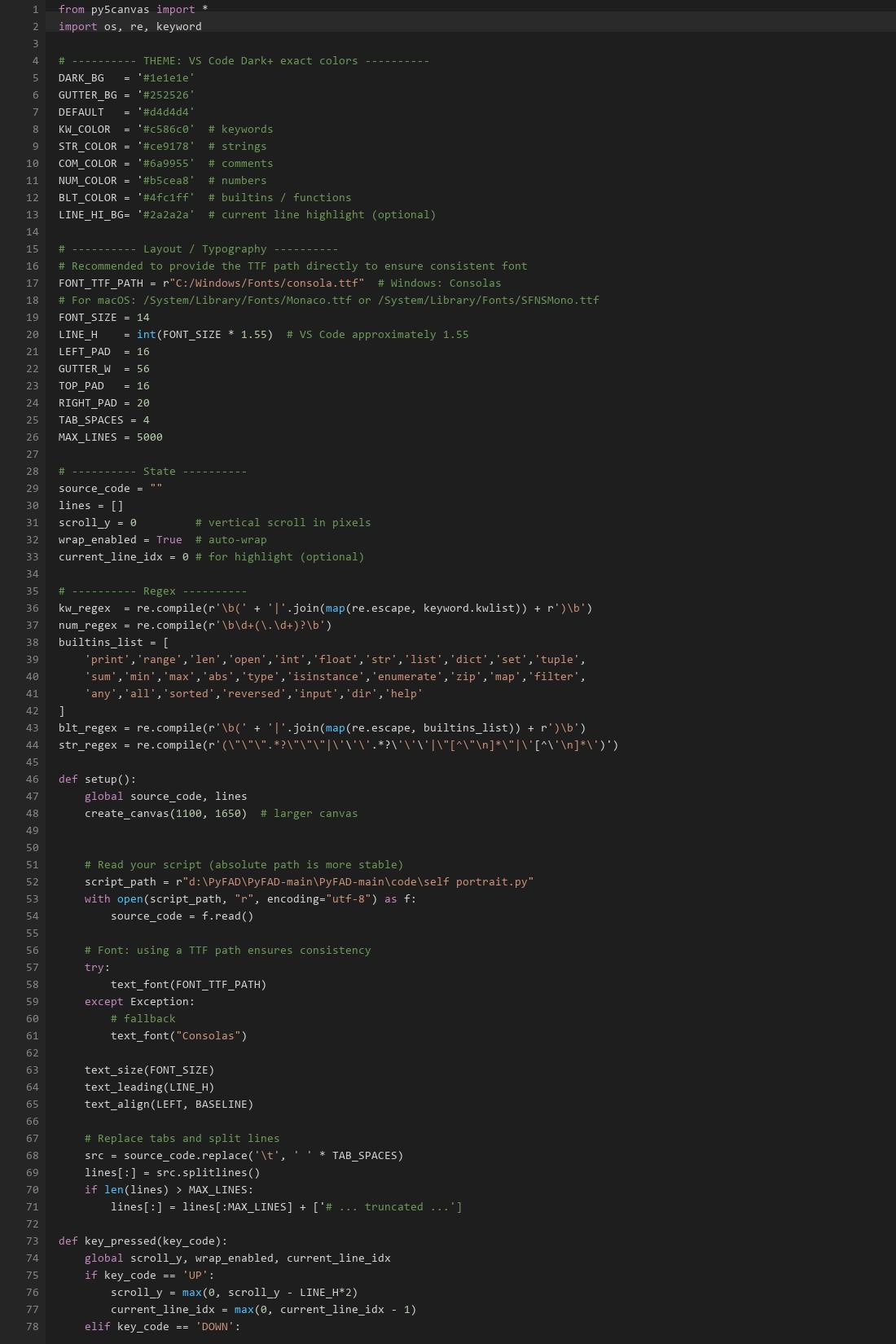
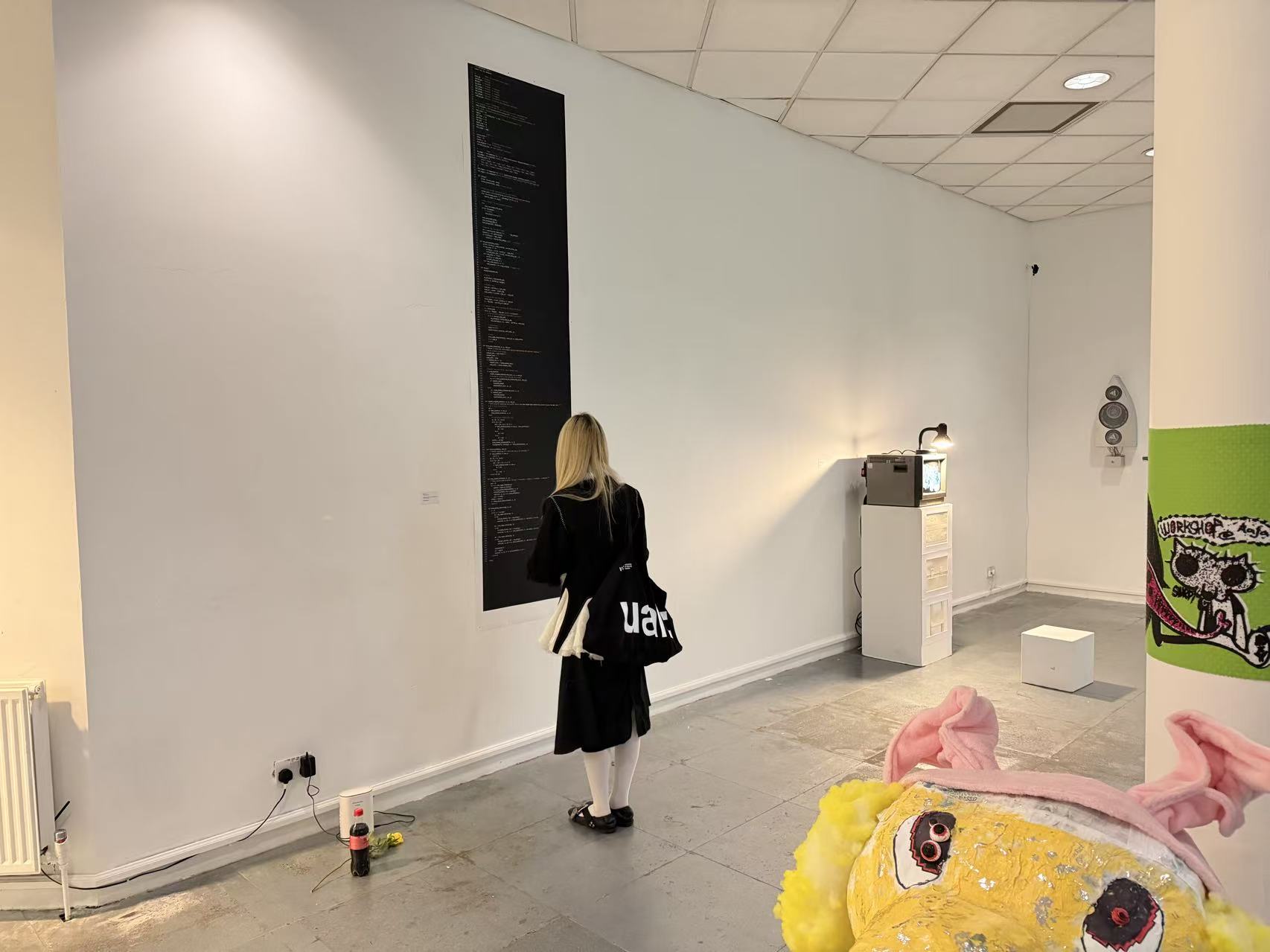
This Is Not Code is a self-referential image generated by the code it depicts. A Python program reads its own source file and renders it line by line before the resulting image is printed at 59.4 × 244.7 cm. Transferred from screen to paper, the code’s primary mode of encounter shifts from operation to observation, foregrounding its syntax, indentation, rhythm, density and repetition.
In most computational art, code remains backstage while its rendered output becomes visible. This work reverses that relationship. Approaching coding as a form of writing with artificial light, it asks what code might become when encountered as photography rather than solely as software.
Installation
Read full project text
Code is usually approached as something to be executed, debugged, optimised or understood. Above all, it is expected to function. I became interested in what might happen if, instead, it was approached simply as something to look at.
At first glance, the work resembles a screenshot, a source file or a technical document. The title deliberately echoes René Magritte’s The Treachery of Images, questioning the relationship between what is seen and what is assumed. While code is conventionally understood as an operational language between humans and machines, this work temporarily suspends that role and foregrounds its visual qualities.
The project approaches code through photography. The word photograph derives from the Greek phos (light) andgraphê (writing), literally meaning “writing with light.” For me, writing code on a luminous screen is also an act of writing with artificial light. Photography offers another way of encountering code: as an image rather than solely as software.
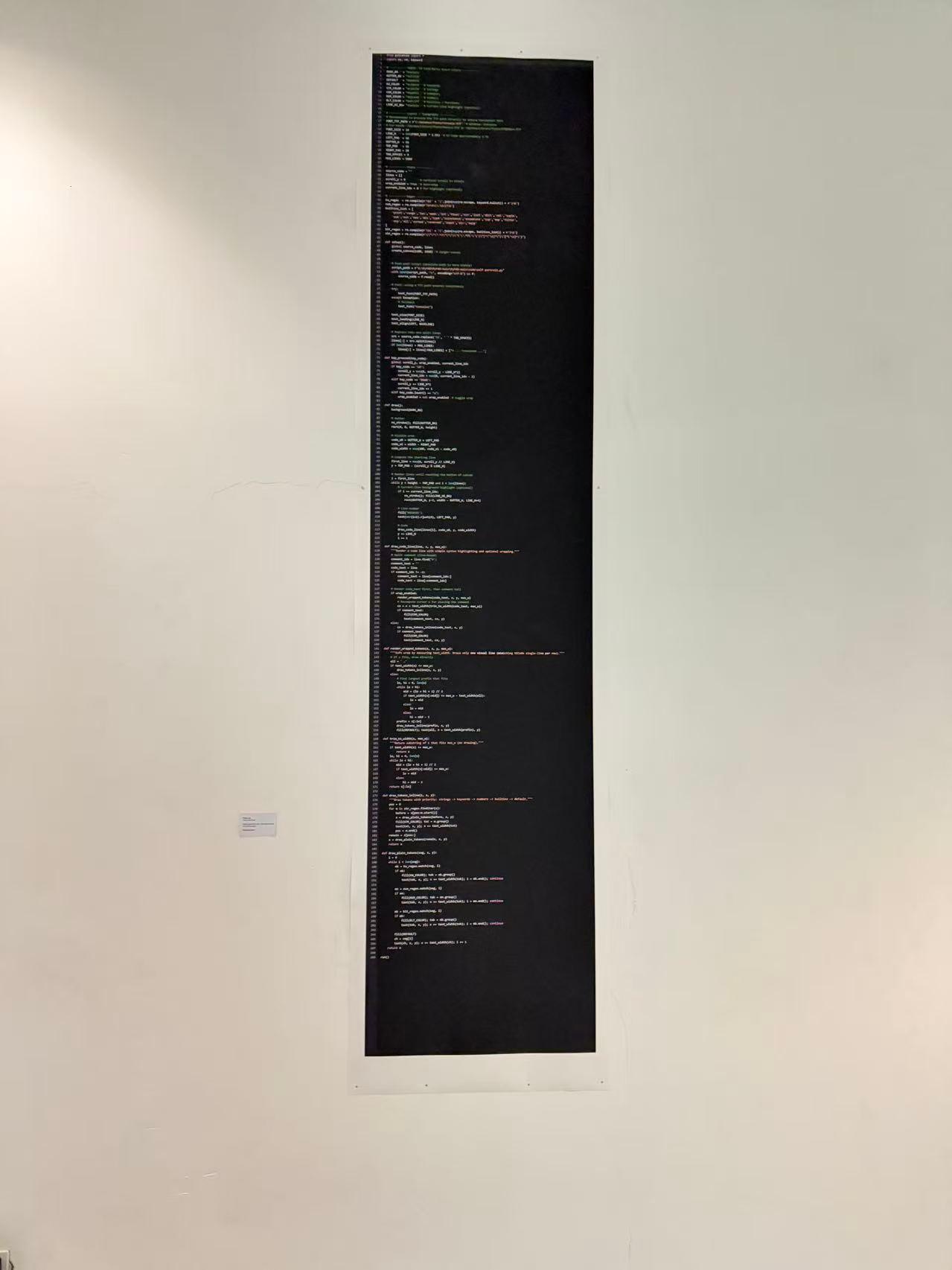
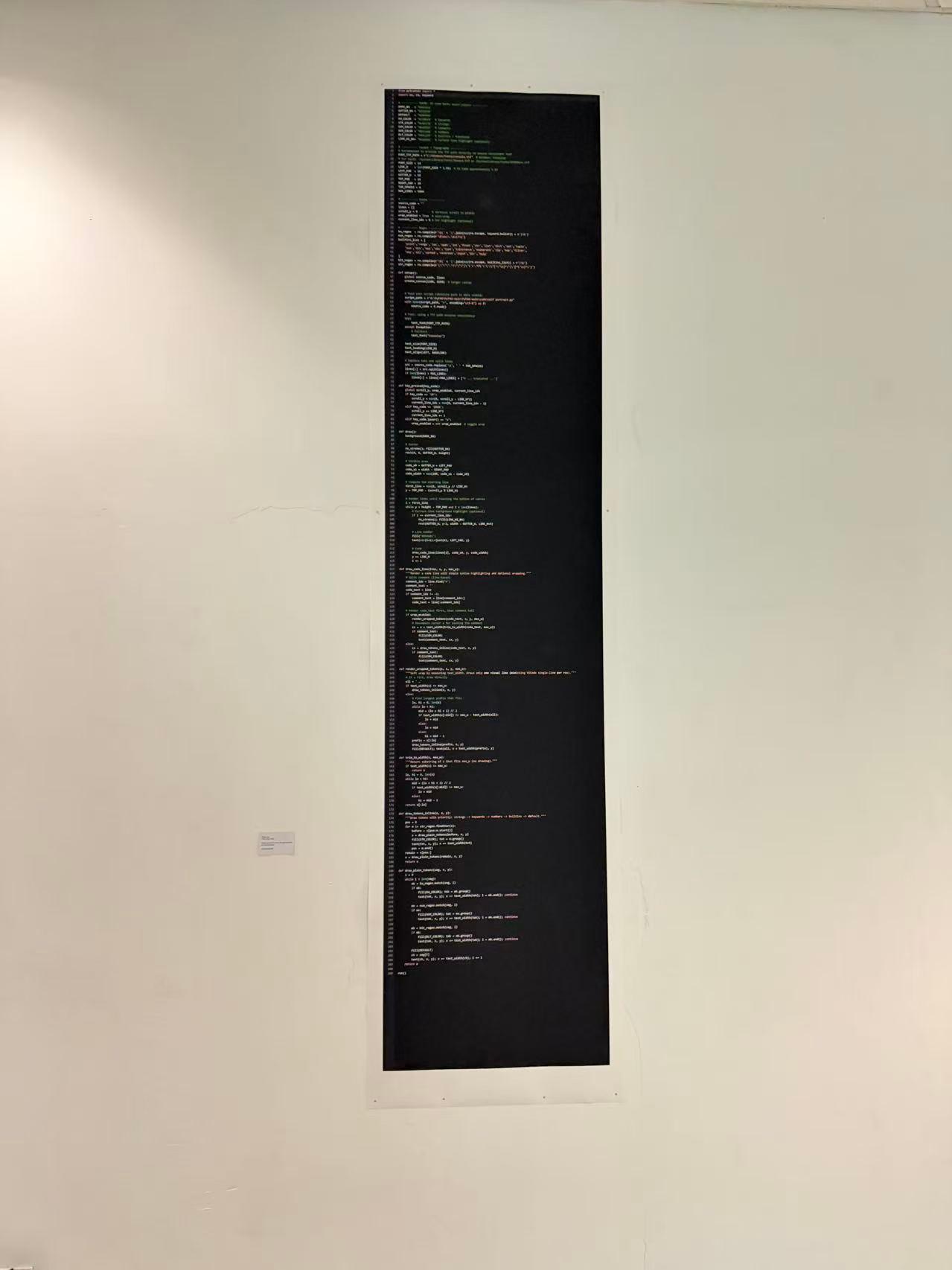
Enlarged beyond immediate comprehension, the work cannot be taken in at once. Viewers must move closer, step back and navigate its surface. It appears readable, yet complete understanding always remains out of reach.
As AI-assisted programming and so-called vibe coding reshape our relationship with code, we increasingly describe intentions in natural language while machines generate code on our behalf. Code is shifting from something we primarily write to something we increasingly read, review and inspect.
If code is no longer encountered only as software, what else might it become?